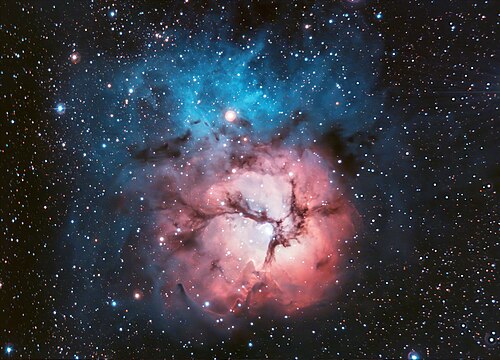
Nebula
Vast clouds of gas and dust — the stellar nurseries. Disturbances cause clumps of gas to collapse under gravity and begin a long process of condensation.
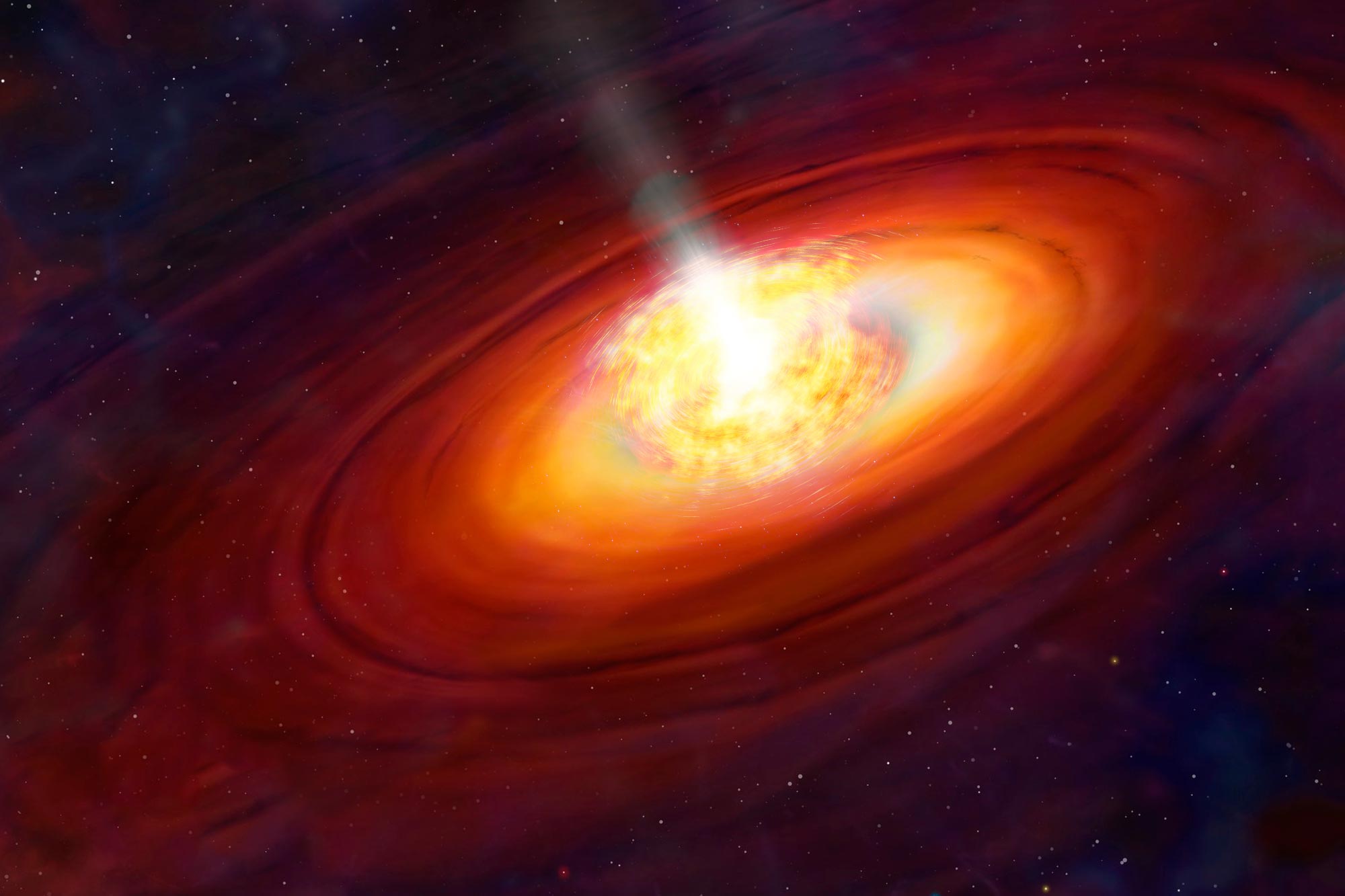
Protostar
The collapsing core heats up. Pressure climbs and an opaque, glowing protostar forms — nuclear fusion has not yet started at the core.
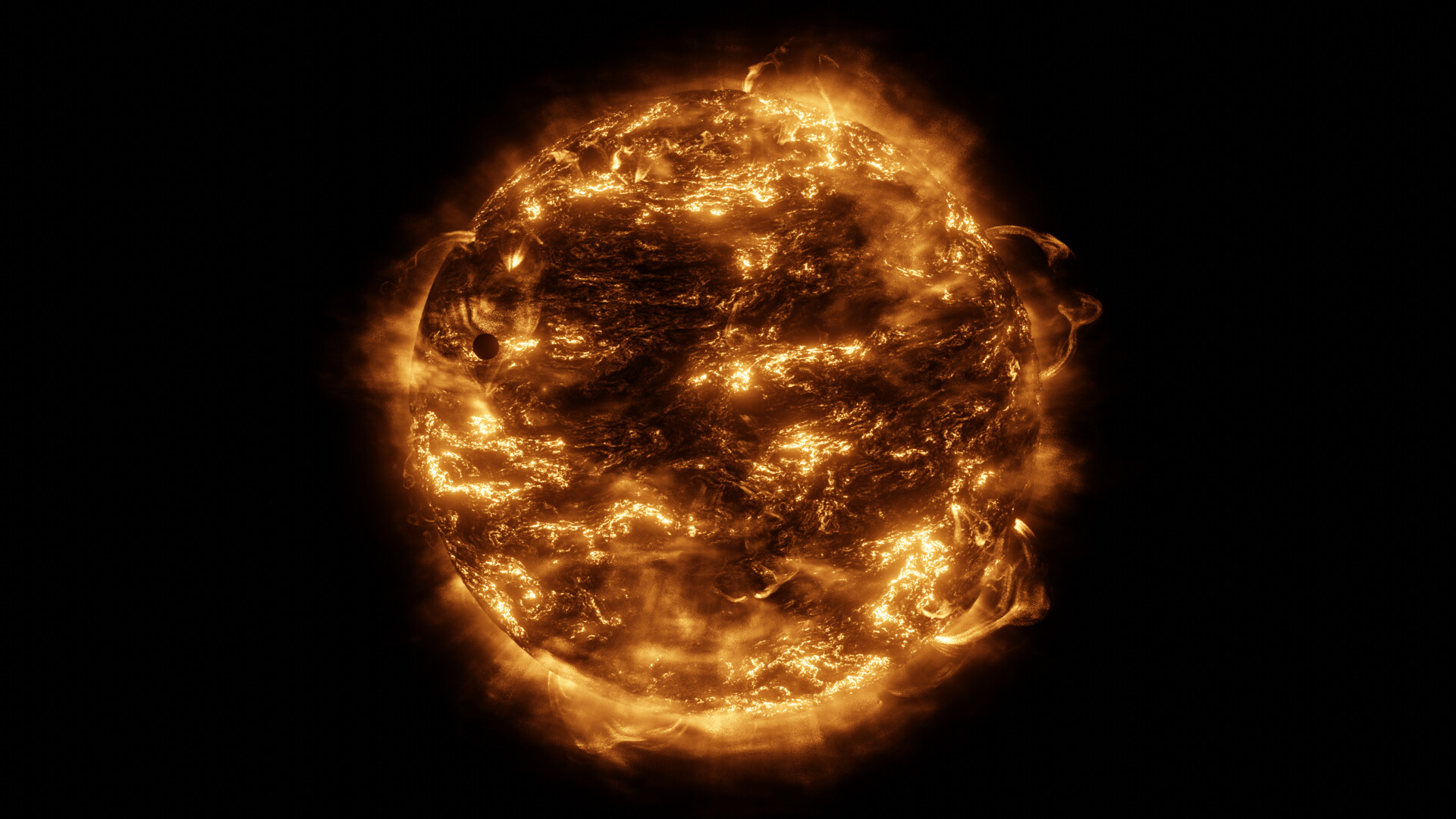
Main Sequence
Hydrogen fusion ignites in the core and the star shines steadily. Main sequence lifetime depends strongly on mass — low mass lives long, massive ones short.
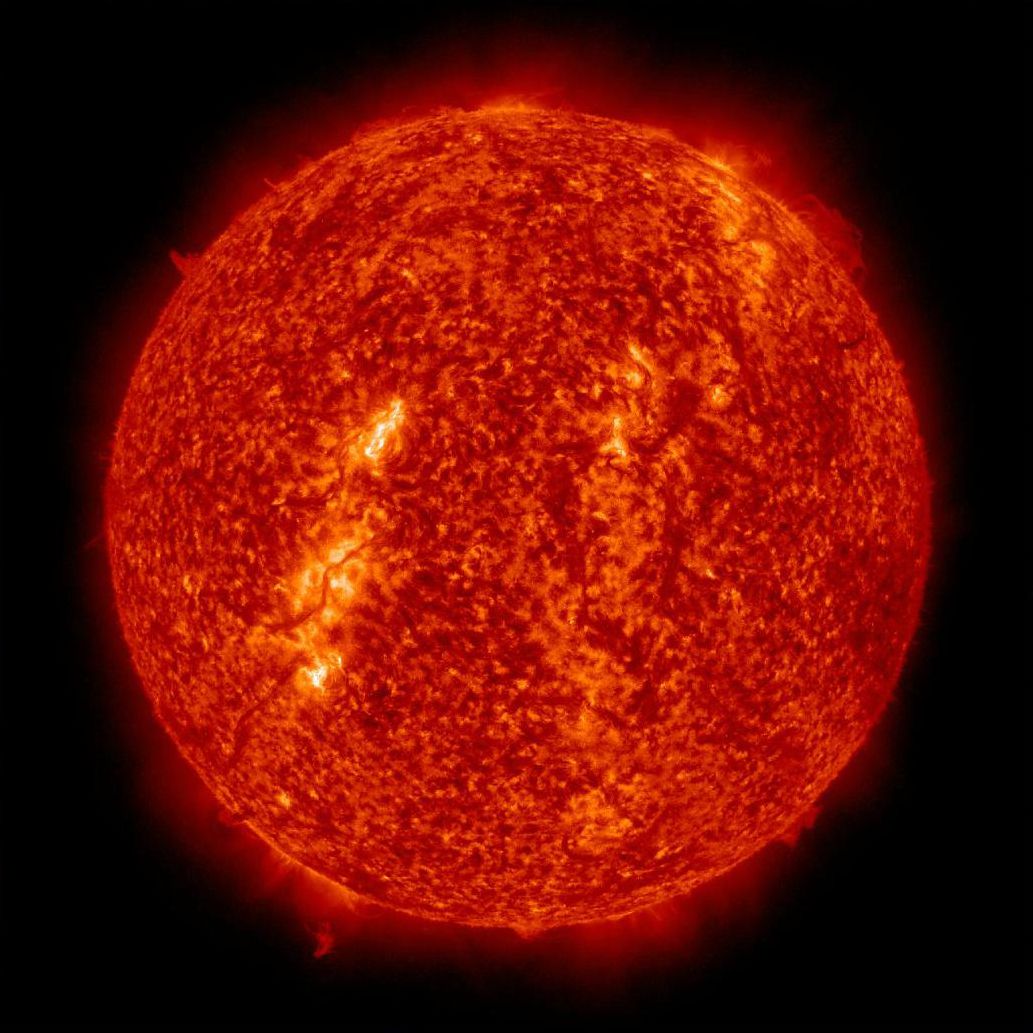
Red Giant
After hydrogen is exhausted in the core, fusion shifts outward. The envelope expands vastly and the surface cools—appearance becomes red and luminous.
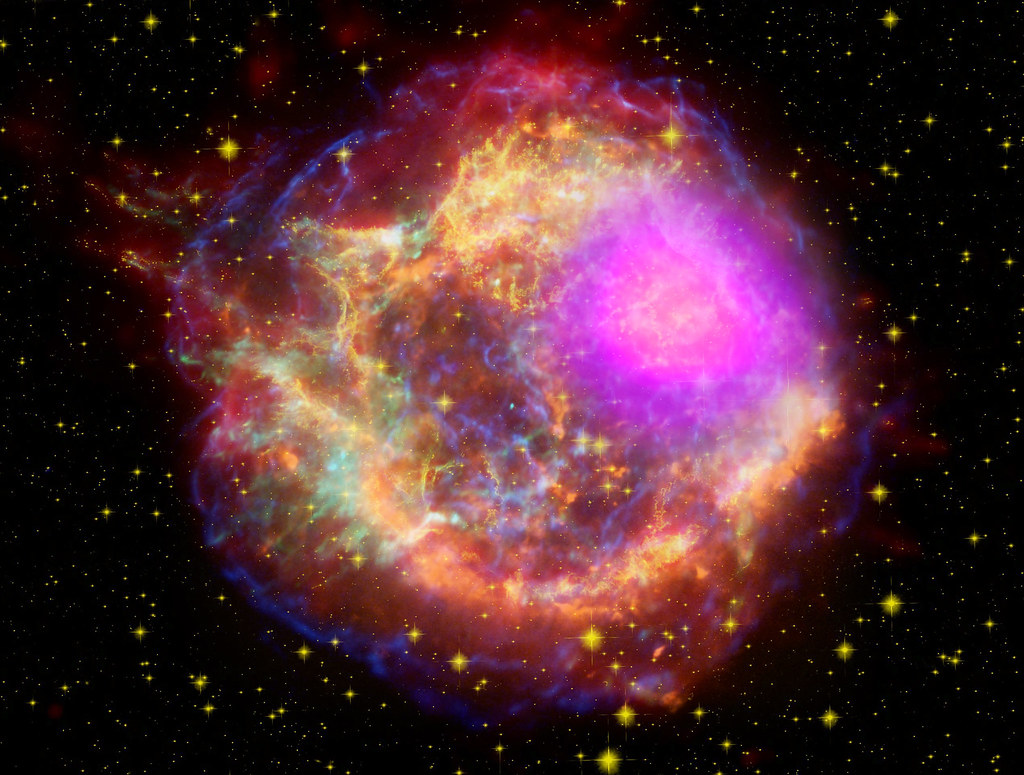
Supernova
For massive stars, core collapse can cause an enormous explosion — producing heavy elements and briefly outshining entire galaxies.
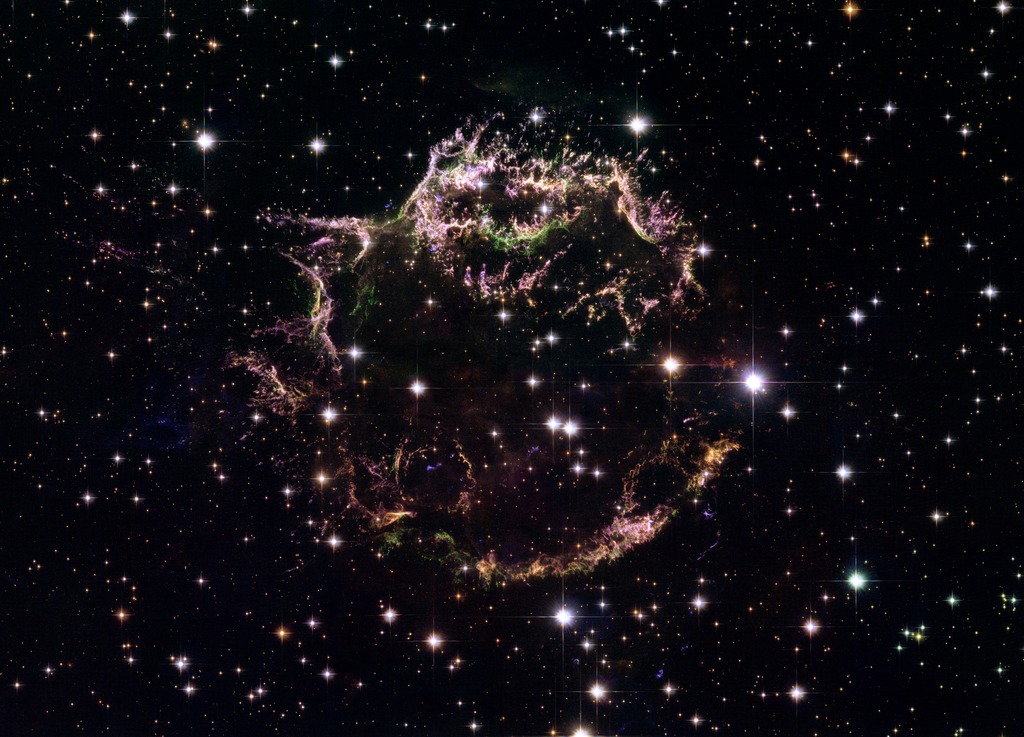
Remnant
Leftovers of the explosion become a neutron star or black hole, while the expelled material seeds future generations of stars and planets.